
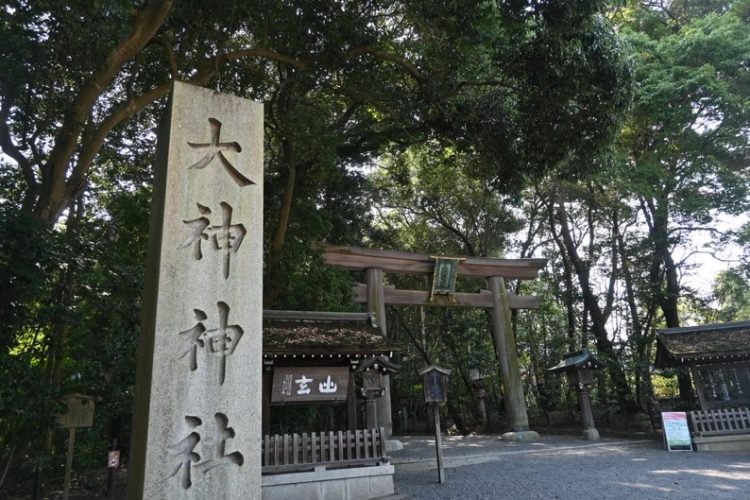
三輪山を御神体とする「大神神社」
Omiwa Shrine, whose sacred object is Mount Miwa
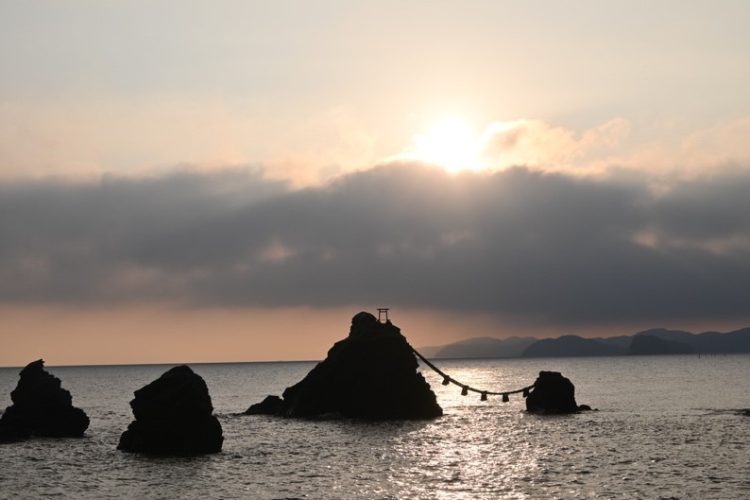
伊勢神宮の東側、二見興玉神社からの日の出
Sunrise from Futamiokitama Shrine, east of Ise Shrine
倭の女王卑弥呼が世を去った3世紀半ば以降、ヤマト王権が奈良の三輪山の麓、「纏向」に誕生。広く各地の豪族と政治的に結びついていった。
それは纏向遺跡に多く見られる当時の国家プロジェクトとも言える巨大な前方後円墳の各地に広がっていたことでもわかる。
ヤマト王権のあった三輪山は神の宿る、日の昇る山として古くから崇拝され、三輪山の真東にある伊勢こそが日の出る鎮座地として選ばれていった。
太陽の神、天照大神は伊勢神宮に祀られている。
After the death of Queen Himiko of Wa in the mid-3rd century, the Yamato royal authority was established in Miwa, at the foot of Mount Miwa in Nara.
It became politically linked with powerful clans throughout the country.
This is evident from the huge keyhole-shaped tombs, which are often seen at the Miwa ruins and were a national project at the time, spread throughout the country.
Mount Miwa, where the Yamato royal authority was located, has long been revered as the mountain where the sun rises and where the gods dwell, and Ise, directly east of Mount Miwa, was chosen as the place where the sun rises.
The sun goddess Amaterasu Omikami is enshrined at Ise Shrine.
〒633-0001
奈良県桜井市三輪1422
1422 Miwa, Sakurai City, Nara Prefecture
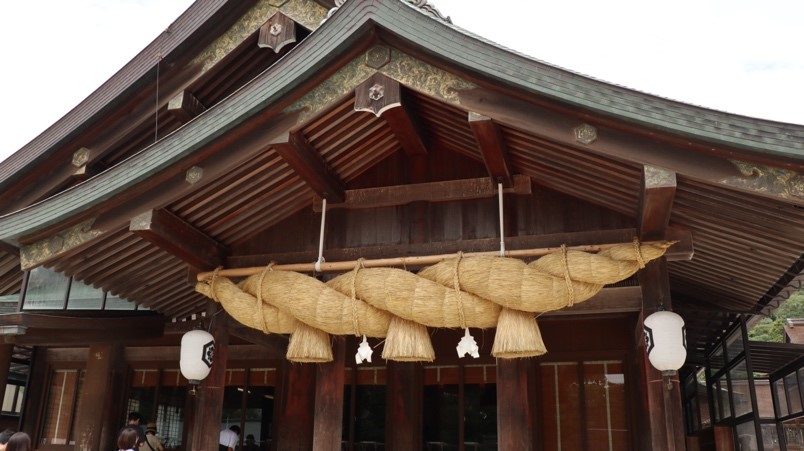
大国主命を祀る出雲大社 他の神社とは左右逆のしめ縄
Izumo Taisha Shrine, dedicated to Okuninushi-no-Mikoto,has a shimenawa rope that is the opposite of other shrines.
菱田春草「羅浮仙」1901年
Shunso Hishida " Ra fuse n " 1901
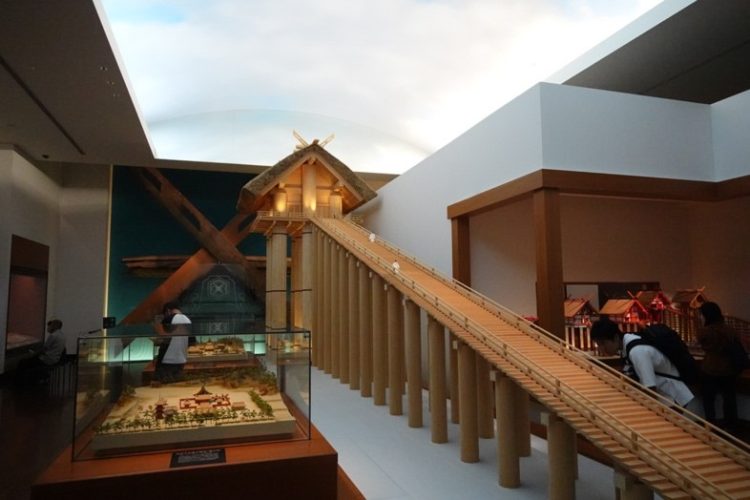
2000年に発掘された直径3mの柱から想像した巨大神殿模型
(島根県立古代出雲歴史博物館より)
A model of a giant temple imagined from a 3-meter-diameter pillar excavated in 2000
(from the Shimane Museum of Ancient Izumo History)
3世紀後半、纒向のヤマト王権は巨大な古墳を次々と築き、出雲にも前方後円墳などが40余築かれたように関係が深くなっていったようだ。
出雲は弥生時代から王権は誕生し、稲作も始まり、対馬海流のお陰で先端の大陸文化を最初に取り入れている、ヤマト王権からすると注意を払うべき所であったようだ。
またヤマト王権からは太陽の沈む、黄泉の国とも言える恐ろしいところとも考えられていたのではないだろうか。
In the second half of the 3rd century, the Yamato royal authority in Makimuku constructed huge burial mounds one after another, and it seems that their ties with Izumo deepened, as over 40 keyhole-shaped burial mounds were built in the area as well.
Izumo was the birthplace of royal authority in the Yayoi period, rice cultivation also began there, and thanks to the Tsushima Current, it was one of the first places to adopt advanced continental culture, so it seems that it was an area that the Yamato royal authority needed to pay attention to.
The Yamato royal authority may also have considered it a terrifying place where the sun sets, a place that could be likened to the underworld.
〒699-0701
島根県出雲市大社町杵築東195
195 Kitsukihigashi, Taisha-cho, Izumo City, Shimane Prefecture
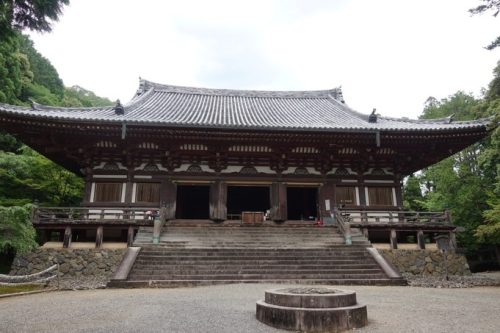
清滝川を渡り、350段ほどの石段を登り楼門から奥へ登ったところの荘厳な佇まいの神護寺「金堂」
Cross the Kiyotaki River, climb about 350 stone steps, and at the top of the tower gate you will reach the majestic Kondo Hall of Jingoji Temple.
神護寺は密教美術の宝庫で空海が伝えたとされる我が国最古の国宝「両界曼荼羅図」がある
Jingo-ji Temple is a treasure trove of esoteric Buddhist art and is home to the "Ryokai Mandala," Japan's oldest national treasure, said to have been brought to Japan by Kukai.
「洛西の三尾」と称される高雄、槙尾、栂尾の山々。
その高雄に神護寺は鎮座している。ここは日本の密教の創始者である最澄と空海が交わったところでもある。
最澄は奈良時代の仏教に背を向け比叡山で修行を積んでいたところ、和気清麻呂の息子広世に見出され遣唐使として唐で学ぶチャンスを得た。
帰国後清麻呂の菩提寺高雄山寺で「法華経」の天台仏教の講義をすることで最澄の学識が認められ、より桓武天皇の厚い敬愛を得られたのである。
同時期に留学生として唐で密教の学びを得て多くの密教経典などを持ち帰った空海は、その密教の加持祈祷など社会問題になっていた怨霊の鎮魂などで嵯峨天皇から絶大な信頼を得て高雄寺で密教の講義を初め、最澄とその弟子までも学んだとされる。
要は天台宗と真言宗がその時交わったのである。
高雄寺は824年、神願寺と高雄山寺が合併し神護寺となり真言宗として現在に至っている。
The mountains of Takao, Makio, and Toganoo are known as the "Three Pies of Rakusai."
Takao is home to Jingo-ji Temple.It is also here that Saicho and Kukai, the founders of Japanese esoteric Buddhism, met.
Saicho turned his back on Buddhism during the Nara period and trained at Mount Hiei, where he was discovered by Wake no Kiyomaro's son Hiroyo, who gave him the opportunity to study in Tang China as a Japanese envoy.
After returning to Japan, Saicho's scholarship was recognized when he lectured on Tendai Buddhism based on the Lotus Sutra at Kiyomaro's family temple, Takaosan-ji Temple, which further earned him the deep respect and affection of Emperor Kanmu.
Around the same time, Kukai studied esoteric Buddhism in China as a student and brought back many esoteric sutras. His esoteric rituals and prayers, which were a social problem and helped appease vengeful spirits, earned him the utmost trust of Emperor Saga, and he began lecturing on esoteric Buddhism at Kouō-ji Temple, where even Saicho and his disciples are said to have studied.
In essence, Tendai and Shingon Buddhism intersected at that time.
Kouō-ji Temple was formed in 824 by the merger of Shingan-ji Temple and Takaosan-ji Temple to become Jingo-ji Temple, a Shingon sect temple that remains to this day.
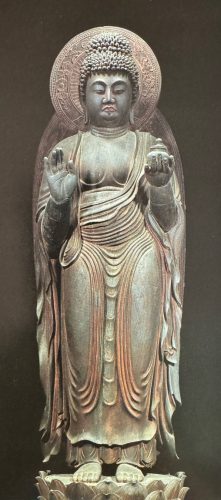
本尊・薬師如来像
写真は「神護寺」図録より
The principal image of Yakushi Nyorai (Bhaisajyaguru)
Photo taken from the Jingoji Temple catalog
〒616-8292
京都市右京区梅ヶ畑高雄町5番地
5 Takao-cho, Umegahata, Ukyo-ku, Kyoto City

大徳寺「金毛閣」
Daitokuji Temple "Sanzen-in"

大徳寺「三玄院」
Daitokuji Temple "Sanzen-in"
紫野とは染料の紫を取るための紫草が生えている野をいう。ここは皇族などが狩猟などを行ったところであり、大徳寺はそこに鎮座している。
その大徳寺は平安時代には花園天皇、後醍醐天皇などの後援を得るなど、室町時代においても幕府からではなく堺などの商人たちなどからの後援で営まれてきた。
20余もある塔頭はそれぞれ自治が保障され、そこがまた凛とした空気を醸し出している理由でもある。
その後室町時代でも大徳寺住職であった一休宗純において応仁の乱で荒廃した法堂、正門などの復興、再興を幕府に頼らず彼を支えてきた堺の商人たちや民衆の後援で営まれてきたのである。
Murasakino refers to fields where purple grass, used to extract purple dye, grows.
This was a place where members of the imperial family hunted and engaged in other activities, and Daitokuji Temple is located there.
During the Heian period, Daitokuji Temple received patronage from Emperors Hanazono and Godaigo. Even during the Muromachi period, it was supported not by the shogunate but by merchants from Sakai and other areas.
Each of the temple's more than 20 sub-temples was guaranteed autonomy, which is also one of the reasons for its dignified atmosphere.
Later during the Muromachi period, Ikkyu Sojun, the head priest of Daitokuji Temple, rebuilt the lecture hall and main gate that had been destroyed during the Onin War. This reconstruction was carried out not with support from the shogunate but through the backing of Sakai merchants and the general public.
またこの臨済宗の大本山は「大徳寺の茶づら」と呼ばれるように、村田珠光、千利休が関わってきた茶道の本山の寺として名が通っている。
茶人、千利休は地元堺の南宗寺に参禅し、本山の大徳寺とも親しくしていた。
堺が織田信長の直轄地となり、利休は茶堂として召し抱えられ、その後豊臣秀吉にも仕え政治的にも力を持ったとされている。
その中、当時大破していた大徳寺の山門の修築において、利休の雪駄ばきの木造を楼門の2階に設置したなどを理由として秀吉から切腹を言い渡されたのである。
でも実際「金毛閣」と呼ばれた楼門は、その名と雄大な姿は侘び茶を完成させた千利休とはとても合わない気もするが。
その大徳寺聚光院に利休は眠る。
大徳寺境内の隣に小堀遠州が眠る「孤篷庵」がある。
遠州は徹底的に無駄を削ぎ落とし、黒い楽茶碗を用いた千利休や師匠であった自身の感性を表し続けた古田織部とも違う従来の「侘び寂び」とも一線を引いた明るい心が安らげる「綺麗さび」と言われる茶の道を極めていった。
遠州流茶道の祖として名高い。
また遠州は徳川和子の内裏入りの女御御所や二条城、大阪城天守閣など数多くの普請にも携わる多才の徳川家に仕えた官僚でもあった。
This Rinzai sect's head temple is also known as the headquarters of the tea ceremony, with Murata Juko and Sen no Rikyu involved, and is often referred to as "Daitokuji's Tea House."
The tea master Sen no Rikyu practiced Zen at his local Nanshuji Temple in Sakai and was also on friendly terms with the head temple, Daitokuji.
When Sakai came under the direct control of Oda Nobunaga, Rikyu was employed as a tea master and later served Toyotomi Hideyoshi, becoming politically influential.
During the repair of Daitokuji's Sanmon gate, which had been badly damaged at the time, Hideyoshi ordered Rikyu to commit seppuku (ritual suicide) for reasons such as installing a wooden replica of Rikyu's geta sandals on the second floor of the tower gate.
However, the name and majestic appearance of the gate tower known as "Kinmokaku" seem a complete mismatch with Sen no Rikyu, who perfected the wabi-cha style of tea.
Rikyu is buried in Jukoin Temple at Daitokuji Temple.
Next to the Daitokuji temple grounds is Kohoan, where Kobori Enshu is buried.
Enshu thoroughly eliminated all unnecessary elements and distinguished himself from Sen no Rikyu, who used black Raku tea bowls, and his master Furuta Oribe, who continued to express his own sensibilities.
He drew a line from the traditional "wabi-sabi" aesthetic and mastered the art of tea known as "kirei sabi," a style that brings about a bright and peaceful mind.
He is renowned as the founder of the Enshu school of tea ceremony.
Enshu was also a talented bureaucrat who served the Tokugawa family and was involved in numerous construction projects, including the palace of Tokugawa Kazuko when she entered the Imperial Palace, as well as Nijo Castle and the Osaka Castle Tower.

大徳寺「大仙院」
Daitokuji Temple"Sanzen-in"

大徳寺「大仙院」庭園
Daitokuji Temple"Daisen-in Garden"

大徳寺「孤篷庵」
Daitokuji Temple"Kohoan"
〒603-8231
京都府京都市北区紫野大徳寺町53
53 Daitokujicho, Murasakino, Kita-ku, Kyoto City, Kyoto Prefecture

建仁寺「雲龍図」
Kenninji Temple "Cloud Dragon"


建仁寺
Kenninji Temple
臨済宗 東福寺に預けられ禅僧の修行を続けながら、幕府の御用絵師 狩野元信に師事しその後狩野永徳に学んだ海北友松は、なんと60を過ぎてから独自の強い画風を水墨画として代表作「雲龍図」を描ききった。
その後も「花鳥図」「竹林七賢図」「山水図」など多くの障壁画を描き続け、晩年は穏やかで詩情豊かな「月下渓流図屏風」を描いた人生であった。
前半生が不明な海北友松を葉室麟が小説「墨龍賦」で独自に描き切っている。
友松の子、小谷忠左衛門が三代将軍家光の乳母の春日局に呼ばれ「海北友松様には昔たいそう世話になった」と話し始めるところから小説は始まる。
実は春日局の父、斎藤内蔵助は友松の友人で信長を本能寺で亡き者とした明智光秀の家臣であった。
光秀、内蔵助は秀吉に敗れ栗田口の刑場で磔にされたのだが、友としてやらねばと遺骸を真如堂住持東陽坊長盛と共に危険を顧みず奪還して真如堂に葬ったのだった。
海北友松は織田信長に滅ぼされた海北家の再興を願い続けた武士として義の心が強く、また小説では東福寺時代の修行で一緒だった後の安国寺恵瓊との関係も生き方は違っても共に戦国時代を生き抜いた。
「人は美しく生きねばならない」とするその生き方は日本の独自の美しい生き方を語っている。
結びでは忠左衛門は春日局によって海北家の再興として友雪の号を与えられ狩野探幽の教えを受け、その後友松の画風を受け継いでいた。
妙心寺麟祥院に襖絵「雲龍図」「西湖図」を描いた。春日局の菩提所である。
海北友松の墓は斎藤内蔵助とともに真如堂にある。
While enrolled at the Rinzai sect's Tofukuji Temple and continuing his Zen training, Kaihō Yusho studied under the shogunate's official painter Kano Motonobu and later Kano Eitoku.
It was not until he was over 60 that he completed his distinctive ink painting masterpiece, the "Cloud Dragon."
He continued to paint many other screen paintings, including "Flowers and Birds," "Seven Sages in a Bamboo Grove," and "Landscapes," and in his later years painted the serene and poetic folding screen "Mountain Stream Under the Moonlight."
Hamuro Rin portrays Kaihō Yusho, whose early life remains unknown, in his novel "Bokuryufu."
The novel begins with Yusho's son, Otani Chuzaemon, being summoned by Kasuga no Tsubone, the wet nurse of the third shogun Iemitsu.
He begins by saying:
"Kaihō Yusho once took great care of me."
Kasuga no Tsubone's father, Saito Kuranosuke, was in fact a friend of Yusho and a retainer of Akechi Mitsuhide, who killed Nobunaga at Honnoji Temple.
Mitsuhide and Kuranosuke were defeated by Hideyoshi and crucified at the Kuritaguchi execution grounds.
Feeling a sense of obligation to his friend, Yusho risked his life to retrieve their remains with the Shinnyodo Temple abbot Toyobo Nagamori and buried them at Shinnyodo Temple.
Kaihō Yusho was a samurai who continued to pray for the revival of the Kaihō clan, which had been destroyed by Oda Nobunaga.
The novel also describes his relationship with Ankokuji Ekei, who trained with him at Tofukuji Temple.
Despite their different ways of life, they both lived through the turbulent Sengoku period.
Their belief that "people must live beautifully" expresses a uniquely Japanese philosophy of life.
In the end, Chuzaemon was given the name Yusetsu by Kasuga no Tsubone as part of the revival of the Kaihō family.
He studied under Kano Tan'yū and later inherited Yusho's painting style.
He painted the sliding screen paintings "Cloud Dragon" and "West Lake" at Rinshoin Temple of Myoshinji Temple.
This temple is also the memorial temple of Kasuga no Tsubone.
Kaihō Yusho's grave lies at Shinnyodo Temple together with Saito Kuranosuke.

東福寺
Tofukuji Temple

真如堂
Shinnyodo Temple

葉室麟 小説「墨龍賦」
Hamuro Rin's novel "Bokuryufu"
〒605-0811
京都府京都市東山区大和大路通四条下る小松町584
584 Komatsucho, Yamato-oji-dori Shijo Sagaru, Higashiyama-ku, Kyoto City
日本の仏教の開祖とも言える厩戸王子こと聖徳太子が建立し、または携わったとされる日本を代表する飛鳥時代の寺院である。
厩戸王子は574年に用明天皇を父として誕生し、推古天皇の即位とともに20才で摂政となり、32才で斑鳩宮に移り住むまで政務を行なっていたとされる。
578年、権勢を誇っていた物部守屋に対し、まだ14才の厩戸王子は四天王寺像を作り、当時は戦いに呪術はつきものであり戦勝祈願の誓約をたてたのである。
四天王とは持国天王、増長天王、広目天王、多聞天王の護国の天王たちであり、これにより仏教の普及を誓ったのである。
物部守屋を亡き者とした後、蘇我馬子は絶大な力を得て仏教の信仰に尽力し飛鳥寺の建立を成し遂げ、厩戸王子は法隆寺、四天王寺と広大な寺を建立していった。
This is one of Japan's most representative Asuka period temples, believed to have been built or involved in the work of Prince Shotoku, also known as Prince Umayado, who is considered the founder of Japanese Buddhism.
Prince Umayado was born in 574 to Emperor Yomei and is said to have become regent at the age of 20 upon the accession of Empress Suiko to the throne, carrying out government affairs until he moved to Ikaruga Palace at the age of 32.
In 578, at the age of 14, Prince Umayado created the Shitennoji statues to pray for victory in the battle against the powerful Mononobe no Moriya, a time when magic was an integral part of war.
The Four Heavenly Kings are the guardian deities of the nation: Jikoku Tenno, Zocho Tenno, Komoku Tenno, and Tamon Tenno, and by doing so they pledged to spread Buddhism.
After the death of Mononobe no Moriya, Soga no Umako gained immense power and devoted himself to the Buddhist faith, successfully building Asukadera Temple, while Prince Umayado built the vast temples of Horyuji Temple and Shitennoji Temple.


飛鳥寺は日本での初めての本格的仏教寺院である。
588年の蘇我馬子によって建立された。
本尊は釈迦如来坐像であり、日本最古の仏像である。
飛鳥寺は『日本書紀』によると百済から仏舎利が献上され、寺院建築の専門家たちが渡来し建設されたとされる。
今日の飛鳥寺は中金堂に位置し、当時は広大な寺域を有していた。
Asukadera Temple is Japan's first full-scale Buddhist temple.
It was built by Soga no Umako in 588.
Its principal image is a seated statue of Shaka Nyorai, the oldest Buddhist statue in Japan.
According to the Nihon Shoki, Asukadera Temple was built after Buddhist relics were donated from Baekje, and temple architecture experts were sent to Japan to construct it.
Today's Asukadera Temple is located in the Chukondo Hall, but at the time the temple grounds were extensive.
〒634-0103
奈良県高市郡明日香村飛鳥682
682 Asuka, Asuka Village, Takaichi District, Nara Prefecture


仁王像が立つ母屋造りの中門
The main gate with Nio statues.

高さ34.1メートル。
屋根は緩やかな弧を描き、中心を貫く心柱は何も固定されず組積に差し込まれたまま。
The structure rises to a height of 34.1 meters.
The roof forms a gentle curve, and the central pillar that runs through the structure is not fixed but inserted into the framework.
厩戸王子こと聖徳太子は政界から身を引き斑鳩に移り住み、自身が陣頭指揮をとって607年建立したのが法隆寺である。
世界最古の木造建築とされている。
法隆寺には650体を数える仏像があり、本堂には釈迦三尊像があり病に倒れた聖徳太子の快癒を願って作られたものとされる。
また東院伽藍の本堂夢殿には太子の等身大と伝えられる救世観音立像がある。
Prince Shotoku, also known as Prince Umayado, withdrew from politics and moved to Ikaruga, where he personally directed the construction of Horyuji Temple in 607.
It is considered the oldest surviving wooden structure in the world.
Horyuji Temple houses approximately 650 Buddhist statues. In the main hall stands the Shaka Triad, which is said to have been created in prayer for Prince Shotoku's recovery from illness.
In addition, the Yumedono Hall in the Eastern Precinct houses the standing statue of Guze Kannon, believed to be a life-size representation of the prince.
〒636-0115
奈良県生駒郡斑鳩町法隆寺山内1-1
1-1 Horyuji Sannai, Ikaruga-cho, Ikoma-gun, Nara Prefecture

「四天王寺」中門から五重塔・金堂・講堂を望む
View of the five-story pagoda, main hall, and lecture hall from the inner gate of Shitennoji Temple.
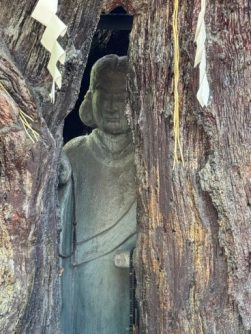
椋木に潜み逃れた聖徳太子像 大聖勝軍寺にて
Statue of Prince Shotoku who escaped by hiding in a mulberry tree at Daisho Shogunji Temple
古代の河内八尾中心に一大勢力を誇った物部氏、そのリーダーであった独特な呪術の技を生かした物部守屋。
その守屋に挑んだのが守屋の妹を妻とした奈良の豪族蘇我馬子。
馬子は当時仏教への関心が高まってきていた皇室に反仏教勢力として守屋を旗頭に仕立て、厩戸王子と共に戦いを展開した。
守屋は今の大阪森ノ宮で落命。
呪術の守屋の首級は大きな災いをもたらすと、厩戸王子の発案で玉造の崖を切り開き、日本で初めての霊を鎮魂する仏教寺院「四天王寺」を建立したと伝えられている。
現在の場所はその後キツツキに破壊された寺院を茶臼山の荒陵に再建されたものである。
The Mononobe clan boasted great power centered around Yao in ancient Kawachi, and their leader was Mononobe Moriya, who utilized his unique magical skills.
Challenging Moriya was Soga no Umako, a powerful lord from Nara who married Moriya's sister.
At a time when interest in Buddhism was growing within the Imperial family, Umako made Moriya the figurehead of an anti-Buddhist force and fought alongside Prince Umayado.
Moriya was killed in what is now Morinomiya, Osaka.
It is said that Prince Umayado, believing that the sorcerer Moriya's head would bring great disaster, suggested cutting into the cliffs of Tamatsukuri and constructing Shitennoji Temple, Japan's first Buddhist temple dedicated to the repose of spirits.
The current site was later rebuilt at the ruins of Mount Chausu after the temple was destroyed by woodpeckers.
〒543-0051
大阪府大阪市天王寺区四天王寺1-11-18
1-11-18 Shitennoji, Tennoji-ku, Osaka City, Osaka Prefecture